5 min read
I want to tell you about a case that tested everything we stand for at Aaron Ferguson Law.
It involved a catastrophic injury, an employer that destroyed evidence, and a seven-day trial that produced tens of thousands of pages of documents. When the trial judge ruled against us on penalties despite the employer's conduct, we took the fight to the Minnesota Workers' Compensation Court of Appeals.
The system doesn't always work the way it should. Sometimes you need attorneys willing to stand tall when opponents use underhanded tactics and judges make unfavorable rulings.
Here's what happened—and why we'll always fight for what's right for our clients.
The Accident Should Have Been Clear-Cut
Our client was a traveling salesman driving to a scheduled work meeting. As he approached Farmington, Minnesota, he attempted to pass another vehicle on the highway.
The other driver didn't like being overtaken. He made aggressive maneuvers into our client's lane, ultimately forcing the salesman's car off the road and into a tree.
The injuries were catastrophic. Our client had to be airlifted to the hospital, placed in a medically-induced coma, and underwent emergency surgeries. His life hung in the balance.
Under workers' compensation law, this should have been straightforward. When an injury arises out of and occurs in the course and scope of employment, the employer must pay benefits. Our client was traveling to a work meeting. He was doing his job.
It should have been an open-and-shut case. It was not.
The Employer and Insurer Had Other Plans
Instead of conducting a proper investigation, the employer and insurer did only cursory work. They reviewed an inaccurate police report that misrepresented the facts of the accident, then denied all benefits.
They claimed two things: first, that our client wasn't actually working for them that day. Second, that, even if he was working, he had committed a "prohibited act" by violating their safe driving policies—essentially blaming him for the other driver’s road rage.
Neither claim was true.
We jumped into action immediately. We informed the employer and insurer of the actual facts and the law. We demanded they pay benefits without delay. And, anticipating a legal fight, we reminded them of their duty to preserve all relevant evidence.
They refused to cooperate. They withheld evidence. They provided false or misleading justifications for their decisions. And shortly after the accident, they terminated our client—using a background check issue as an excuse, even though he had disclosed everything during his thorough pre-employment screening.
Fighting Through Obstruction
We filed over a dozen motions throughout this case just to get basic discovery and compliance with court orders. But the trial judge was sympathetic to the employer's arguments. He denied our motions to compel cooperation.
But as the case progressed, the lies unraveled.
The employer claimed they had a strong "prohibited act" defense—that our client's driving was reckless. But their own witnesses contradicted them. Their investigator found that our client's conduct was "lawful." Another witness they quoted selectively in their brief actually testified that everything our client did was legal under Minnesota traffic law.
Their risk manager testified that the company's safe driving guideline wasn't even designed to protect employees—it was created "for purposes of insurance." That admission destroyed one of the legal criteria they needed for their defense.
Most damning: they couldn't produce a single example of ever disciplining an employee for speeding. It was their defense, but they had no evidence to support it.
The Evidence They Destroyed
On day four of the seven-day trial, we made a breakthrough.
We got a key witness to admit that the employer had destroyed critical evidence—an electronic map that showed our client's sales territory.
This map had existed since days after the accident. We demanded production of electronic data from the mapping program, and the Court ordered such production. The employer and insurer had it in their possession, knew they were required to preserve relevant evidence, but allowed the map to be overwritten and destroyed.
Why did it matter? Because it would have definitively proved that our client had arrived in his work territory when the accident occurred. The entire "he wasn't working yet" defense evaporated.
One witness for the employer testified she never produced the map because "she wasn't asked"—though she couldn't clarify by whom. The explanation made no sense.
The judge finally issued a sanction against the employer and insurer. But the damage was done. We had spent years and conducted a seven-day trial over a case that should have settled immediately if they had been honest from the beginning.
Standing Before the Appeals Court
We won benefits for our client at trial. The judge correctly found the injury compensable, "no matter what version of events" was presented.
But he refused to award penalties for the employer and insurer's conduct. He called their defense "colorable"—meaning passable—despite the evidence destruction, the lies, the obstruction, and the three years they forced our client to wait.
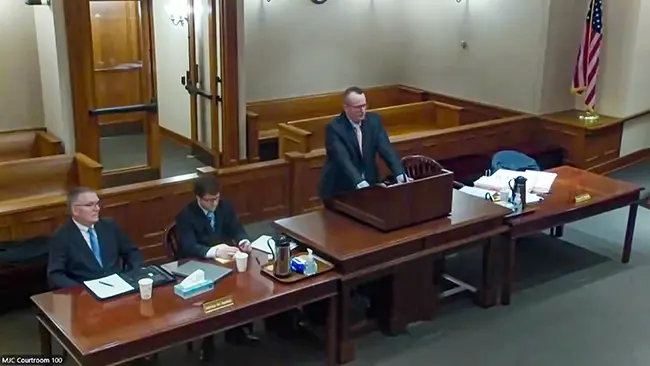
We weren't satisfied with that result. Our client deserved better. So Jeremy Lagasse and I brought the penalties claim to the Minnesota Workers' Compensation Court of Appeals.
The legal standard is clear: employers and insurers must conduct good faith investigations. They must be honest, truthful, and demonstrate candor. They can't misstate facts or misrepresent information.
A good-faith investigation didn't happen here. Had the employer been honest with us three years beforehand, we never would have needed a seven-day hearing. Employers and insurers can’t walk into court to dispute facts that aren't actually in dispute just because they want to avoid penalties.
The appellate judges questioned whether the defense was truly "colorable" given all the problems with it. They asked about the destroyed evidence, the shifting legal theories, the contradictory witness testimony, and the employment contract issues.
Those are the right questions. And they're questions that highlight why this case matters beyond just our client.
Why We Don't Back Down
This isn't the first time we've taken workers' comp cases to Minnesota's highest courts when insurance companies tried to rewrite the rules.
Many attorneys would avoid a case like this. Tens of thousands of pages of documents. Evidence destruction. Unfavorable trial rulings. A sympathetic judge making it harder at every turn.
But that's not who we are.
We build relationships with our clients. We earn their trust. And when they're facing the hardest moment of their lives—catastrophically injured, bills mounting, employer abandoning them—we don't walk away because the fight gets difficult.
This client did everything right. He was driving to work. He followed traffic laws. Another driver's road rage nearly killed him. His employer owed him benefits under the law.
Instead, they destroyed evidence, lied about their investigation, and forced him through years of litigation while he was trying to heal from life-threatening injuries.
That's not acceptable. That conduct deserves consequences. And someone needed to stand up and say so—first to the trial judge, then to the appellate court.
Jeremy and I did that work because it's what our client deserved. It's what every injured worker deserves when facing opponents who won't play by the rules.
We Stand For Your Rights
If you've been injured at work, here's what you need to know: your job is to focus on your health and your recovery.
Everything else—dealing with the insurance company, preserving evidence, fighting through obstruction, taking the case to trial if necessary—that's our job.
If you're facing a workers' compensation denial, especially one that involves bad faith conduct by your employer or their insurance company, we have the experience and commitment to fight for you.
We've stood before appellate judges and made the case for justice. We've torn down bad defenses and held opponents accountable for destroying evidence. That's the kind of advocate you want in your corner.
